How to Build a PR Disaster Kit Before Your Brand Needs One
- Jerome Cleary

- Aug 19
- 8 min read
A PR crisis rarely starts at a convenient hour. It shows up as a customer complaint that spreads, a product issue that gets misread, a leadership mistake, a data concern, a bad review that catches fire, or a rumor that nobody can trace.
The brands that recover fastest are not always the biggest. They are the ones that decided ahead of time what to do when the room gets tense.
A PR disaster kit is the set of documents, people, decisions, and message rules your team can reach for before panic takes over. Think of it less like a polished plan in a folder and more like a working emergency kit. It should be clear, current, easy to find, and simple enough to use under pressure.

Start by naming what could actually go wrong
The weakest crisis plans are written for vague disasters. They say things like “respond quickly” and “protect reputation,” then leave the hard choices for the worst possible moment.
Start with realistic scenarios. List the events that could create public pressure, customer confusion, media attention, legal risk, or employee concern.
Common categories include:
Product defects or service failures
Safety incidents
Customer data exposure
Accusations against an employee or leader
Offensive or inaccurate public statements
Vendor or supply chain problems
Labor disputes
Executive misconduct
Viral customer complaints
Natural disasters that affect operations
Misinformation about your brand
Do not stop at the obvious. A local restaurant, a software company, a nonprofit, and a national retailer all face different risk patterns. A useful kit reflects the real places where your brand is vulnerable.
For each scenario, write a plain-language description of what it might look like.
For example:
“A customer claims our product caused harm and shares photos online before contacting our support team.”
That is more useful than “product crisis.” It gives your team something concrete to picture. It also helps you decide who needs to be involved, what information you must confirm, and what message you can safely share early.
Build a simple crisis severity scale
Not every negative comment is a crisis. Treating every issue like one exhausts the team and can make small problems larger. At the same time, dismissing a serious warning sign can cost valuable hours.
Create a simple three-level severity scale.
Level | What it means | Typical response |
Level 1 | A contained issue with low public visibility | Monitor, document, respond through normal channels |
Level 2 | A growing issue that may affect customers, employees, or partners | Alert the response team, prepare holding statements, track public reaction |
Level 3 | A serious issue with legal, safety, financial, or national attention risk | Activate the full crisis team, pause scheduled content, coordinate leadership response |
Keep the language clear. Nobody should need a communications degree to know when to escalate.
The scale should answer one question fast: Who needs to know right now?
A customer service lead may handle Level 1. Level 2 may include communications, legal, operations, and senior leadership. Level 3 should bring in the decision-makers who can approve public statements, operational changes, refunds, recalls, employee updates, or outside counsel.
Decide who is on the response team
During a crisis, confusion about ownership wastes time. Your kit should name the people who have a role, what they decide, and how to reach them.
Include primary and backup contacts for each role. People travel. Phones die. Leaders go offline. A good kit does not depend on one person being available.
Your response team may include:
Communications lead Owns public messaging and media response.
Executive decision-maker Approves major statements and public commitments.
Legal contact Reviews risk, claims, obligations, and wording.
Operations lead Confirms what happened and what is being fixed.
Customer support lead Tracks customer questions and prepares response guidance.
HR or people lead Handles internal employee concerns and staff communication.
Security or IT lead Joins when the issue involves systems, data, or access.
Outside advisor Supports high-risk incidents or media-heavy situations.
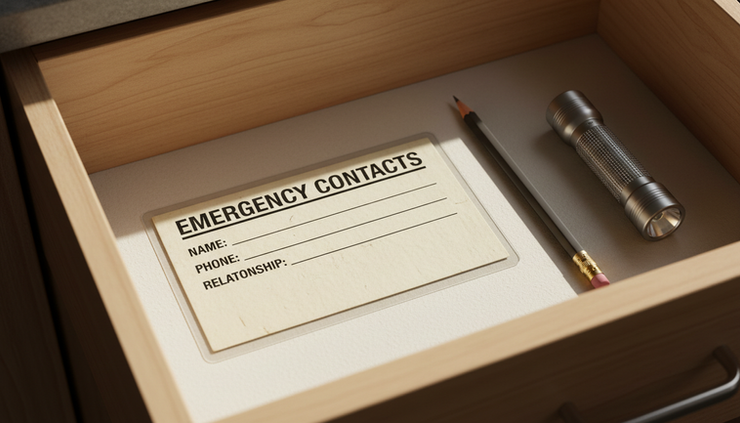
Create a contact sheet with phone numbers, backup numbers, emails, secure chat channels, and after-hours instructions. Store it in more than one place. A cloud folder is helpful, but a printed copy can save time if access systems fail.
Prepare the statements you hope you never need
The first public response in a crisis needs to do three things:
Acknowledge the concern.
Share what you know.
Explain what happens next.
It should not speculate, blame, overpromise, or hide behind stiff language.
Your PR disaster kit should include draft statements for your most likely scenarios. These are not final statements. They are starting points that help your team move faster.
A strong holding statement might look like this:
“We are aware of the concern involving [brief description]. Our team is reviewing the situation now and will share accurate updates as soon as we can. The safety and trust of our customers remain our priority.”
That statement does not solve the issue, but it buys time while showing that the brand is present and paying attention.
Prepare versions for different audiences:
Customers
Employees
Partners or vendors
Reporters
Regulators or public agencies, if relevant
Community members
Each version should fit the audience. Employees often need more context than the public. Customers need clear next steps. Reporters need a direct contact and confirmed facts.
Also prepare message rules. These are short reminders that keep everyone aligned.
Good rules include:
Confirm before sharing.
Do not argue with angry customers in public.
Do not delete criticism unless it violates a clear policy.
Do not guess about cause, blame, numbers, or timing.
Do not say “no comment” when a short holding statement would work better.
Do not make promises the operations team cannot keep.
The right words matter, but discipline matters more.
Create a fact-gathering checklist
The pressure to respond fast can lead teams to publish half-true information. That creates a second crisis.
Your kit needs a checklist for confirming what happened. This should be practical and short enough to use in real time.
Include questions like:
What happened?
When did the team first learn about it?
Who is affected?
Is anyone at risk of harm?
Is the issue still happening?
What has already been done?
What do we know for sure?
What do we still need to confirm?
Who has authority to approve the next update?
Are there legal, regulatory, or contractual obligations?
Use a shared incident log to capture times, decisions, public posts, customer reports, media requests, and internal updates. The log does not need to be fancy. It needs to be accurate.
A simple incident log might include:
Time | Event | Source | Owner | Status |
8:15 a.m. | Customer support received complaint | Support inbox | Support lead | Confirming details |
8:40 a.m. | Operations began review | Internal report | Operations lead | In progress |
9:10 a.m. | Holding statement approved | Crisis team | Communications lead | Ready if needed |
This record helps the team stay aligned. It also helps after the crisis, when you review what worked and what did not.

Know which channels you will use
A crisis response can fail when messages scatter across too many places. Decide ahead of time where official updates will appear.
Your channel plan should include:
Company website or status page
Customer email
Customer support scripts
Internal message channel
Press contact inbox
Phone line or help center
Physical signage, if you operate public locations
If your brand uses social platforms, decide how they fit into the response. Do not let them become the only source of truth. Public feeds move quickly, and comments can distort the message. Your website, email list, or help center should carry the clearest official information.
Also decide what to pause.
During a serious issue, scheduled promotional posts can look careless. Sales emails can feel tone-deaf. Ads may send people to pages that no longer match the moment. Your kit should include instructions for pausing outgoing messages and naming who can make that call.
Write an internal communication plan
Employees often hear about a crisis from customers, friends, or public comments before they hear from leadership. That creates stress and inconsistent answers.
Your kit should include an internal message template that gives staff enough information to respond responsibly.
A good internal update includes:
What happened, based on confirmed facts
What the company is doing now
What employees should say if asked
What employees should not say
Where to send media, customer, or legal questions
When the next update is expected
Give frontline teams special attention. Customer support, retail staff, account managers, delivery workers, and reception teams often take the first wave of questions. They need plain answers, not polished talking points that dodge the issue.
A useful internal line sounds like this:
“If a customer asks about this issue, please say we are reviewing it urgently and will share confirmed updates through our support page. Do not speculate about the cause. Send urgent concerns to [team/contact].”
That kind of guidance reduces confusion and protects employees from being forced to improvise.
Prepare your media response rules
Most brands will not face national media attention. Still, even a small outlet or niche publication can shape the story.
Your media section should include:
The name and contact details of the media spokesperson
Backup spokesperson
Approved company description
Process for logging reporter requests
Deadline tracking
Rules for interviews
Guidance for correcting inaccurate information
Choose spokespeople before the crisis. Train them before they are under pressure. A confident spokesperson does not need to be perfect, but they must be calm, accurate, and consistent.
Write down who is allowed to speak on behalf of the company. Everyone else should know where to send inquiries.
For interviews, prepare a simple rule:
Answer the question you can answer. Do not fill silence with guesses.
That one habit prevents many avoidable mistakes.
Store the kit where people can find it
A crisis kit nobody can access is theater.
Store your kit in several formats:
A shared digital folder with clear permissions
A printed binder in a known location
A secure offline copy of essential contacts
A short mobile-friendly version for leaders and response leads
Name files clearly. Avoid vague titles like `final-plan-v7-updated-real-final.pdf`. Use names people can understand under stress, such as:
`Crisis-contact-sheet`
`Holding-statements`
`Incident-log-template`
`Media-response-process`
`Customer-support-guidance`
`Internal-update-template`
Review permissions. If only one person can open the folder, the kit is fragile. If too many people can edit it, the kit can become messy. Give view access to the people who need it and editing access to the owners.

Practice before the first real crisis
A PR disaster kit gets stronger when people use it. Run a short practice exercise at least twice a year.
Pick one scenario. Set a timer. Ask the team to walk through the first hour.
Test these questions:
Did the right people get alerted?
Did anyone know who had final approval?
Could the team find the contact sheet?
Was the holding statement useful?
Did legal review slow things down in a preventable way?
Did customer support get guidance in time?
Did the team know what to pause?
Were there gaps in the fact-gathering process?
Keep the exercise simple. The goal is not to scare people or create a performance. The goal is to find weak spots while the stakes are low.
After each practice, update the kit right away. If a person changed roles, fix the contact sheet. If a template sounded cold, rewrite it. If approval took too long, adjust the process.
A crisis plan should age like a well-used tool, not like a forgotten policy document.
Keep the kit human
The best crisis communication sounds like it came from responsible people, not from a committee hiding behind legal language.
That does not mean reckless honesty. It means clear, careful, human communication.
When something goes wrong, people want to know:
Are you aware of it?
Are you taking it seriously?
Who is affected?
What should I do now?
When will I hear more?
Will you take responsibility where appropriate?
Your kit should help answer those questions. It should also remind the team to act with care before polish. A perfectly worded statement cannot make up for a slow, defensive, or dismissive response.
Build the kit now, while no one is refreshing a news feed or waiting for a reporter’s deadline. Start with the risks, name the response team, draft the first statements, set the approval path, and practice the first hour.
When trouble comes, the goal is not to look untouched. The goal is to respond with speed, accuracy, and judgment. A prepared brand has a much better chance of doing all three.
For more info: BestPRguy@gmail.com 310 920-2424 www.PublicityandMarketing.com


Comments